

Research
Innovative Solvent Technology “Pre-Digging Pores” Enables Activation-Free Pore Creation for Capacitive Carbon
The Straw Resource Utilization Innovation Team has developed a novel solvent technology for low-temperature pre-carbonization and pore creation of agricultural and forestry wastes, eliminating the reliance on high-temperature corrosive chemicals used in traditional processes. The related findings have been published in Journal of Power Sources.
Current capacitive carbon production processes depend on corrosive chemicals for high-temperature activation. This new technology shows disruptive potential in two aspects: energy savings and cost reduction, as well as customized mesoporous structures. This technology increases the yield of capacitive carbon from agricultural and forestry waste to 35%. The resulting carbon material possesses a specific surface area of 1143.5 m²/g, a pore volume of 2.05 cm³/g, an average pore size of 14 nm (large mesopores), and a specific capacitance of 297 F/g. The assembled energy storage device achieves an energy density of 24.4 Wh/kg and an ultra-fast charge/discharge capability of 15.9 kW/kg. The new technology drives the production cost down to $11.79 per kilogram, more than 40% lower than that of conventional methods. Postdoctoral researcher Tao Keyu from the straw team is the first author. This research was supported by the National Natural Science Foundation of China (22578234) and the Agricultural Science and Technology Innovation Program of the Chinese Academy of Agricultural Sciences (CAAS-ASTIP-2021-BIOMA), among other projects.
Literature link: https://doi.org/10.1016/j.jpowsour.2026.240934
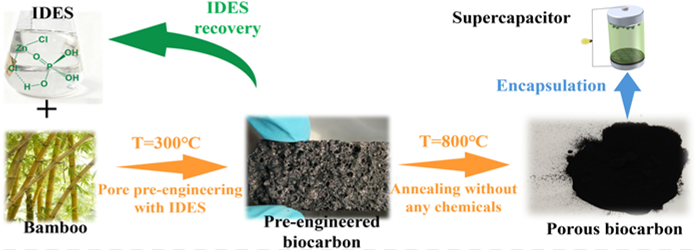
Figure 1. Schematic diagram of the process flow.