

Research
Biogas Institute of Ministry of Agriculture and Rural Affairs Holds Special Meeting on Enhancing Graduate Education Quality and Science Popularization Work
To strengthen the quality assurance of graduate education, implement the fundamental task of fostering virtue through education, and further integrate scientific research education with science popularization, the institute convened a special meeting on enhancing graduate education quality and science popularization work on May 19. The meeting was chaired by Deputy Director General He Mingxiong, and attended by heads of research teams and administrative departments.
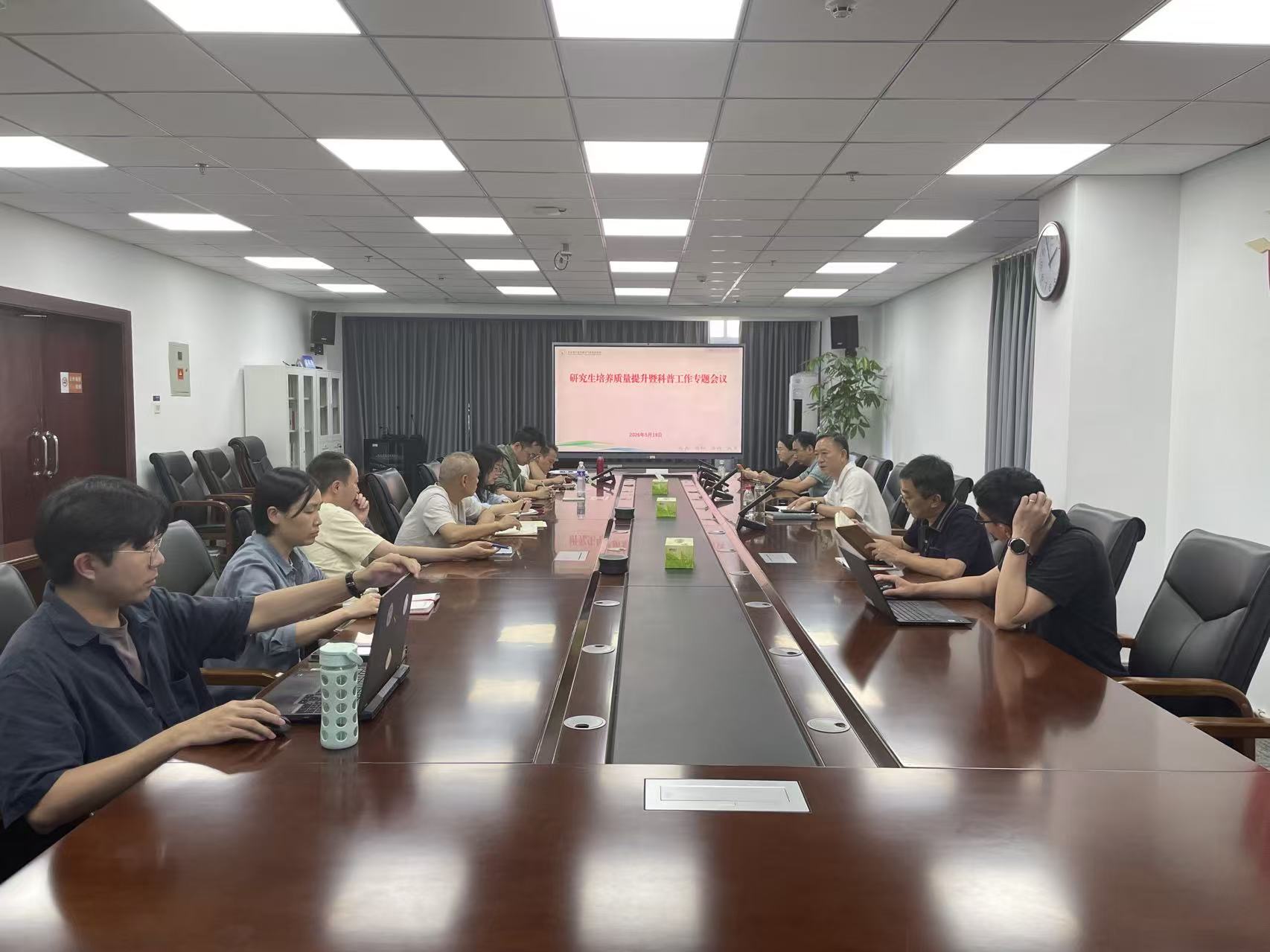
The meeting reviewed the self-assessment results on the academic progress of current graduate students across the institute, discussed measures for improving graduate education quality and the Action Plan for Graduate Education during the 15th Five-Year Plan period, conveyed the key priorities of the 2026 science popularization work of the Chinese Academy of Agricultural Sciences, and analyzed existing shortcomings and weak links in talent cultivation and science popularization. In light of the institute’s research and educational strengths, the meeting also clarified key tasks for improving quality and efficiency in the next stage.
The meeting emphasized that graduate students are an important component of the institute’s talent pool, while science popularization serves as an important pathway for research institutions to fulfill social responsibilities and expand educational approaches. The institute will strictly uphold the bottom line of graduate education quality, reinforce supervisors’ primary responsibility in student cultivation, refine whole-process management of graduate education, and strengthen training in academic ethics, research integrity, and practical innovation, so as to comprehensively improve graduate students’ overall competencies. The institute will also further strengthen science popularization platforms by leveraging its disciplinary and research advantages, building practical science communication platforms, and improving mechanisms for participation, achievement recognition, and incentives in science popularization activities.
The meeting further clarified work priorities and reinforced responsibilities. Moving forward, the institute will continue to focus on educational quality enhancement, coordinate the reform of graduate education and the development of science popularization brands, promote science communication practice on a regular basis, disseminate the value of scientific research, deepen the integration of science and education, and cultivate high-quality young scientific talents with both integrity and competence, thereby continuously improving the institute’s educational outcomes and social service impact.